What Is Wushu? Wushu vs Kung Fu, History & Modern Wushu
 Peter Hoogduin
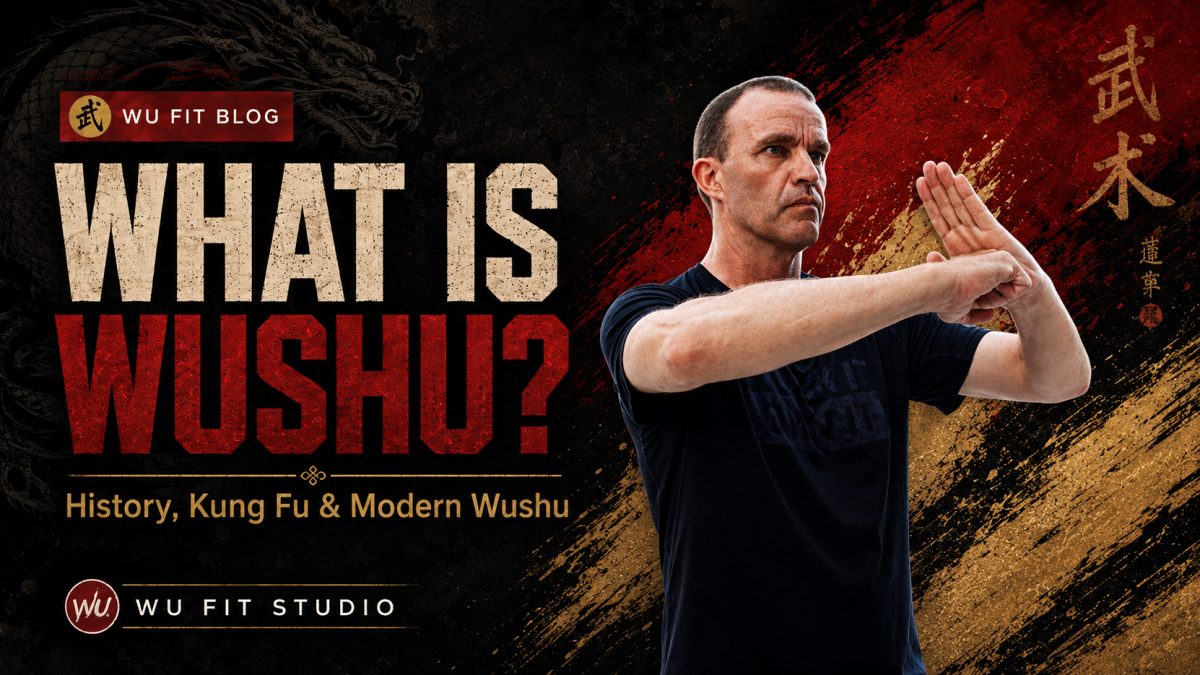
What is Wushu, is it the same as Kung Fu? Discover its history, traditional uses, modern Taolu and Sanda, and why Wushu training still matters today
What Is Wushu? Wushu vs. Kung Fu, Its History, and the Modern Sport
If you’ve seen Wushu before, there’s a good chance the first thing you remember is the high kicks.
Maybe it was the speed.
Maybe it was the weapons.
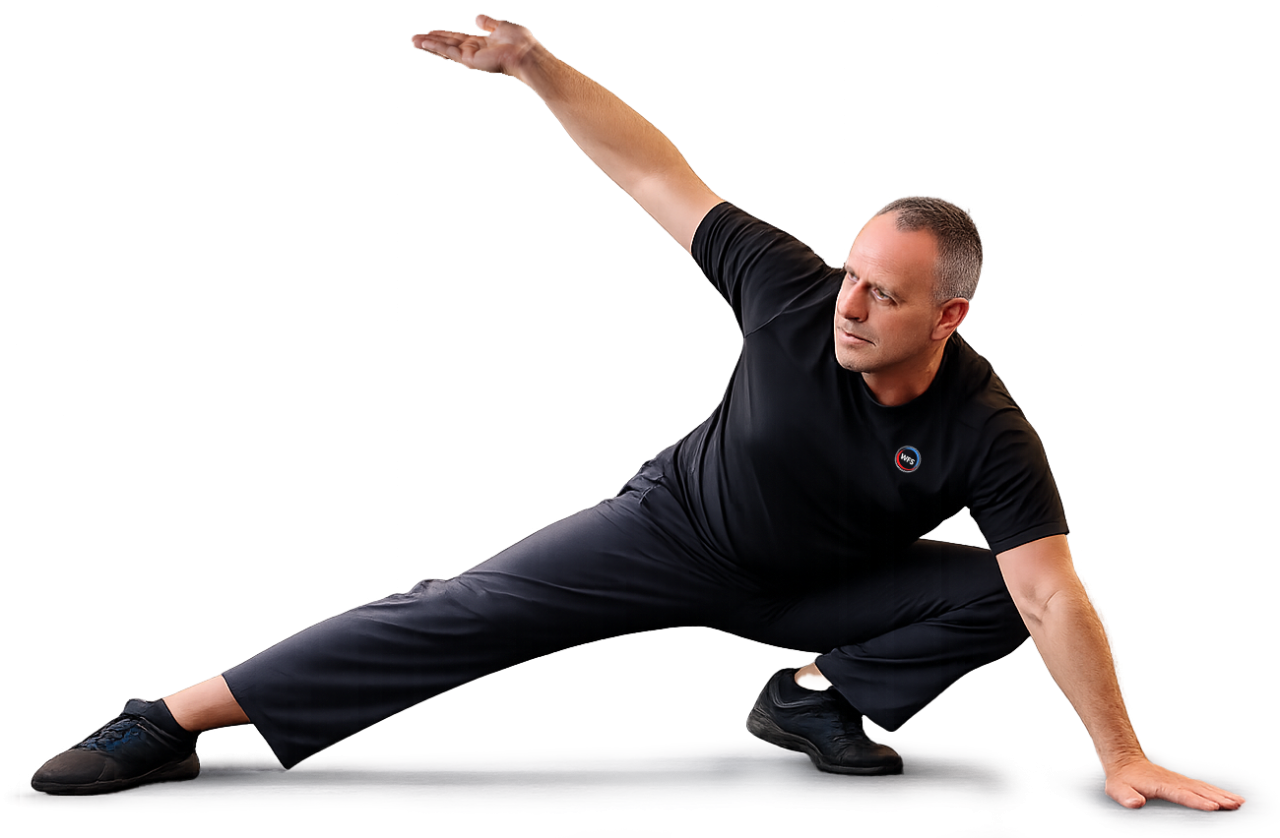
Maybe it was someone dropping into a stance so low that your legs hurt just watching it.
Or maybe it was one of those explosive jumps that makes you wonder how they managed to land without falling over.
That is definitely one side of Wushu.
But it is not the whole story.
At its simplest, Wushu means martial arts. In the context we’re talking about here, it usually refers to Chinese martial arts.
Outside of China, though, the word Wushu is often connected with the modern competitive sport. That is the version many people recognize from competitions, online videos, high kicks, jumps, weapons, and fast routines.
That can make the subject a little confusing.
So let’s clear it up.
What Does Wushu Mean?
Wushu is not one single martial arts style in the same way people might think of Muay Thai, kickboxing, or Brazilian Jiu-Jitsu.
Chinese martial arts developed into a huge number of different systems.
Some use very low stances.
Others stay much more upright.
Some focus on short, compact movements.
Others use bigger, more extended techniques.
Some systems include punches, kicks, grappling, weapons, forms, and even movements inspired by animals.
That is why defining Wushu as simply “the martial art with the flying kicks” leaves out most of the story.
Wushu is much bigger than that.
Wushu vs. Kung Fu: What’s the Difference?
This is one of the first questions people usually ask:
Is Wushu the same as Kung Fu?
The short answer is that both terms are often used when people talk about Chinese martial arts, especially outside of China.
Kung Fu became the better-known term in the West, largely because of martial arts movies and popular culture.
Wushu is also used for Chinese martial arts, but today it is especially associated with the organized modern sport.
So if you see someone performing high kicks, jumps, weapons routines, and fast combinations in an international competition, you are probably looking at modern Wushu.
But modern Wushu did not appear out of nowhere.
It grew out of a much older and much larger Chinese martial arts tradition.
If you are more interested in how we use these ideas for everyday fitness, read:
👉 What Is Wushu Fitness? A Beginner’s Guide to Martial-Arts-Inspired Training
https://www.wufitstudio.com/blog/what-is-wushu-fitness
Where Did Wushu Come From?
Wushu did not begin on a competition floor.
Its early roots were much more practical.
Like martial traditions in many ancient societies, Chinese martial arts developed around combat, defense, and survival.
People developed empty-hand fighting methods, along with skills using weapons such as swords and spears.
But those methods did not stay frozen in time.
People learned.
They experimented.
They passed their knowledge to the next generation.
Different families, teachers, and communities developed their own ways of training. Over time, that led to different schools, family systems, and martial arts styles.
One of the most famous examples is the martial tradition connected with the Shaolin Temple.
🐉 Want to explore this part in more detail?
👉 History of Wushu: Where Did Chinese Martial Arts Come From?
https://www.wufitstudio.com/blog/history-of-wushu
What Was Traditional Wushu Used For?
Fighting and self-defense were important parts of traditional Wushu, but they were not the only reasons people trained.
Traditional training could also help develop health, physical conditioning, discipline, and general physical ability.
A system might include:
- stances
- footwork
- punches
- kicks
- grappling
- jumps
- weapons
- forms
Forms were especially useful because they gave practitioners a way to train important parts of their system, even without a partner.
You could practice the way you stood.
How you shifted your weight.
How you punched or kicked.
How one movement connected to the next.
And you could repeat those movements until they became more familiar, more controlled, and more natural.
That matters because physical skills rarely improve just because someone explains them to you.
You have to practice.
What Does Wushu Training Develop?
This is probably the part of Wushu that interests me most today.
The original combat environment has obviously changed.
Most of us are not preparing for an ancient battlefield.
Thankfully.
But many of the physical qualities developed through Wushu training are still useful today.
Strength
Stances and controlled movement require strength, especially through the legs, hips, and core.
Flexibility
Kicks and extended positions require a greater range of motion.
Mobility
Being flexible is not the whole story.
You also need to move through that range with control.
If you are not sure how the two differ, read:
👉 Mobility vs. Flexibility: What Most Adults Get Wrong
https://www.wufitstudio.com/blog/mobility-vs-flexibility
Balance
Wushu regularly asks you to shift your body weight, change direction, and control yourself on one leg.
Coordination
Your hands, feet, posture, and direction of movement often have to work together.
Endurance
Repeated movement and longer training sessions can also challenge your general fitness.
Focus and Discipline
You learn something.
It feels awkward.
You repeat it.
You make mistakes.
You adjust.
And gradually, it gets better.
That process can build confidence too.
💪 For a deeper look at these physical benefits:
👉 How Wushu-Based Training Improves Strength, Balance, and Flexibility
https://www.wufitstudio.com/blog/wushu-training-strength-balance-flexibility
What Is Modern Wushu?
As Wushu moved into the modern era, it became more organized and standardized.
There was a practical reason for that.
Imagine trying to run an international competition with hundreds, or potentially thousands, of different martial arts styles.
A judge may understand one system extremely well and know very little about another.
So how do you compare them fairly?
Standardization created common competition categories that could be taught, understood, and judged more consistently.
Modern competitive Wushu developed into two major areas:
Taolu and Sanda.
What Is Wushu Taolu?
Taolu is the forms or routine side of modern Wushu.
Competitors perform routines on a competition floor.
Those routines may include:
- stances
- punches
- kicks
- jumps
- balance positions
- fast combinations
- weapons
Different events represent different areas of Chinese martial arts, including northern-style movement, southern Wushu, Taiji, and weapons.
This is probably the side of modern Wushu most people recognize when they first discover the sport online.
What Is Wushu Sanda?
Sanda is the free-fighting side of modern Wushu.
It has some similarities to kickboxing and Muay Thai, although the rules are different.
Competitors can punch and kick.
They can also use throws and takedowns.
Unlike MMA, however, a takedown does not usually turn into prolonged ground fighting. The match returns to standing.
So Taolu and Sanda can look very different.
One focuses on routines and performance.
The other focuses on direct fighting.
But both sit under modern competitive Wushu.
🥋 Want to understand the difference properly?
👉 Modern Wushu Explained: Taolu, Sanda, and How the Sport Developed
https://www.wufitstudio.com/blog/modern-wushu-taolu-sanda
Is Wushu an Olympic Sport?
This question comes up more and more as Wushu grows internationally.
Wushu is not currently a regular senior Summer Olympic sport.
However, Wushu is included in the Dakar 2026 Youth Olympic Games, which is an important step in the sport’s international development.
That Olympic journey is worth an article of its own.
🏅 Read next:
👉 Is Wushu an Olympic Sport? The Road to Dakar 2026
https://www.wufitstudio.com/blog/is-wushu-an-olympic-sport
Why Does Wushu Matter If You Do Not Want to Fight?
This is where Wushu connects directly with what we do at WU Fit Studio.
Most adults are not trying to become elite martial artists.
They are not training for combat.
They are not trying to make a national Wushu team.
They simply want their body to work better.
They want to feel stronger.
They want to move more freely.
They want better balance.
They want to regain some flexibility.
And they want to stay capable as they get older.
Those are all qualities Wushu training has developed for generations.
At WU Fit Studio, we take inspiration from those qualities and adapt them into something more practical for everyday adults.
You do not need to fight anybody.
You do not have to learn hundreds of traditional techniques.
And no, I am not expecting you to start doing flying kicks around the living room.
The goal is much simpler:
Move better. Get stronger. Stay capable.
If standard gym training has stopped interesting you, you may also enjoy:
👉 A Better Alternative to Boring Gym Workouts
https://www.wufitstudio.com/blog/alternative-to-boring-gym-workouts
Frequently Asked Questions About Wushu
Is Wushu the same as Kung Fu?
Both terms are commonly used when discussing Chinese martial arts. Today, Wushu is also widely associated with the organized modern sport.
Is Wushu used for fighting?
Traditional Wushu includes combat and self-defense methods. Modern Wushu also has a free-fighting discipline called Sanda.
What are Taolu and Sanda?
Taolu is Wushu forms competition. Sanda is Wushu free fighting.
Do you have to be flexible to start Wushu?
No.
Flexibility is something training can help develop. It is not something you have to already have before you begin.
Can adults start Wushu-based training?
Absolutely.
The training simply needs to be appropriate for your current ability and goals.
Continue Exploring Wushu
🐉 Where did Wushu come from?
👉 https://www.wufitstudio.com/blog/history-of-wushu
🥋 How does modern Wushu work?
👉 https://www.wufitstudio.com/blog/modern-wushu-taolu-sanda
🏅 Is Wushu an Olympic sport?
👉 https://www.wufitstudio.com/blog/is-wushu-an-olympic-sport
💪 Interested in the fitness side?
👉 https://www.wufitstudio.com/blog/what-is-wushu-fitness
Want to Try Wushu-Based Training for Yourself?
If the flexibility and movement side interests you more than competition, I created a simple place to start.
The free WU Fit 3-Day Flexibility Reset gives you three guided sessions designed to help you begin working on your flexibility and movement.
No extreme stretching.
No martial arts experience required.
Just start where you are.
👉 Start your free 3-Day Flexibility Reset:
https://www.wufitstudio.com/f/wu-shu-3-day-flexibility-reset
🥋 WU Fit Studio
Move Better. Get Stronger. Stay Capable.
FREE
WU Fit Studio 3-Day Flexibility Reset
Feel Looser, Move Better, and Start Improving Flexibility in Just 3 Days
A free 3-day guided flexibility reset for adults 40+ who feel stiff, tight, or out of practice and want a simple way to start moving better.